


Acne or Something Else? How to Tell Common Breakouts Apart
Knowledge matters when dealing with breakouts, but an accurate diagnosis cannot be made from a photo or description alone. Acne, folliculitis, and rosacea may look similar even though they require different care and treatment.
Pay attention to the type and location of lesions, itching, pain, and reactions to products. Do not squeeze deep inflammation or try to treat every breakout with acids.

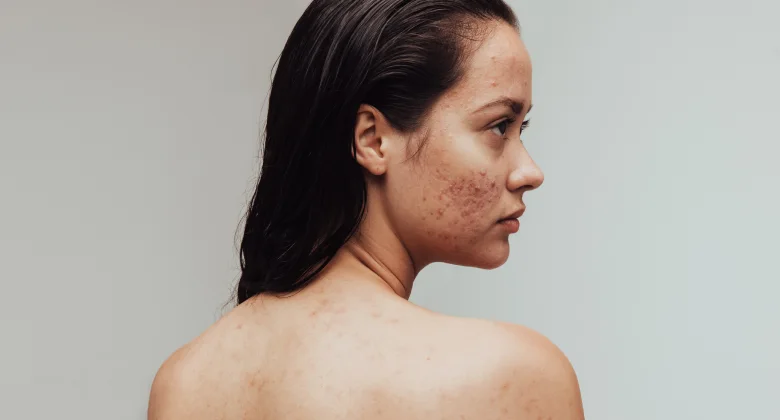
Acne develops when sebum and dead skin cells collect inside a pore. It may appear as open or closed comedones, papules, and pustules. Hormonal changes can increase sebum production and contribute to breakouts, particularly along the lower face.
For mild acne, begin with gentle cleansing, a non-comedogenic moisturizer, and the gradual introduction of one suitable active ingredient such as salicylic or azelaic acid. Evaluate results after several weeks of consistent care rather than after a few days.

Nodules and cysts develop deep in the skin, often feel painful, and carry a higher risk of scarring. A cyst contains pus, while a nodule generally feels firmer. This is not simply a surface infection that can be safely removed by squeezing or an at-home peel.
See a dermatologist for deep painful lesions, rapid worsening, or scarring. Prescription treatment is often required. Picking or squeezing increases the risk of infection, discoloration, and permanent scars.

Malassezia folliculitis is not a type of common acne. It is inflammation of the hair follicles associated with Malassezia yeast. It often appears as small, uniform, itchy papules and pustules without comedones. The upper chest and back are common locations, though the hairline and face may also be affected.
It can resemble acne or bacterial folliculitis, so a clinician should confirm the diagnosis. Treatment generally involves antifungal therapy rather than self-treatment with salicylic acid.

Rosacea is not a painful “type of pimple.” It is a chronic condition that can cause persistent redness or discoloration, flushing, visible blood vessels, burning, and acne-like papules and pustules. Some people also develop dry or irritated eyes.
Heat, alcohol, spicy food, stress, and certain skin care products may trigger flares, but triggers vary. Strong acids and scrubs can worsen discomfort. See a dermatologist for an accurate diagnosis and treatment plan, especially when discoloration persists or eye symptoms appear.